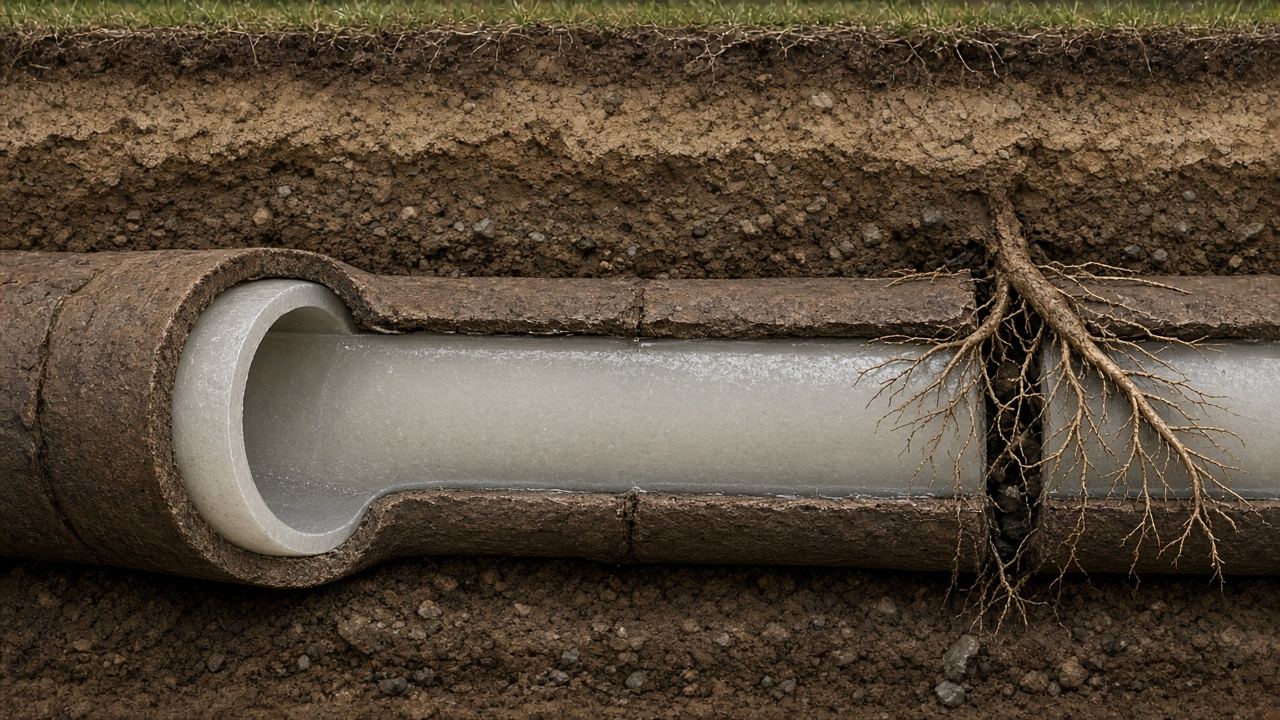
Pipe lining, also called cured-in-place pipe or CIPP, puts a resin-soaked liner into the existing sewer lateral and cures it in place, so the old pipe becomes the host for a new jointless pipe. It seals cracks and root-prone joints in clay and cast-iron lines without a trench.
Lining suits a pipe that is cracked or leaking at the joints but still round and on grade. It slightly reduces the inside diameter, and it cannot fix a belly where the pipe has sagged. Listings here are companies whose name, website or listed services point to this work, plus companies carrying our Trenchless badge. A listing is not a guarantee that a company offers a specific method, so confirm it on the call and ask to see the camera inspection first.
Manufacturers commonly rate CIPP liners for several decades, but real life depends on the product, the installer and the condition of the pipe. Ask what warranty the contractor gives in writing.
Can roots grow through a lined pipe?
A properly installed liner has no joints for roots to enter along the lined section. Roots can still get in at unlined connections, so ask how the ends and any branch connections are sealed.
Does the line need to be cleaned first?
Yes. The pipe is usually hydro jetted or descaled and then camera inspected before the liner goes in, and inspected again after.